

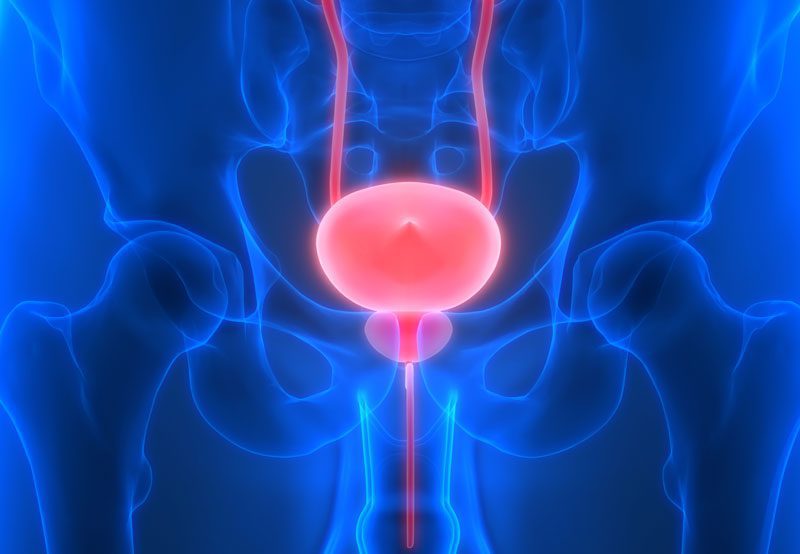
Bladder cancer is a condition in which abnormal cells grow in the lining of the bladder, most commonly arising from the urothelium (the inner lining of the urinary tract). The majority of cases are classified as urothelial carcinoma, which can range from non-invasive tumors confined to the bladder lining to more aggressive forms that invade deeper layers or spread beyond the bladder. Early detection is important, as outcomes vary significantly depending on the stage and grade of the disease.
Causes
Bladder cancer develops due to genetic changes in bladder cells, often influenced by environmental and lifestyle factors. Common causes and risk factors include:
- Tobacco use: The most significant risk factor, as harmful chemicals are excreted in urine and irritate the bladder lining
- Occupational exposures: Chemicals used in dye, rubber, leather, and industrial industries
- Chronic bladder irritation: Recurrent infections, long-term catheter use, or bladder stones
- Prior radiation or chemotherapy: Particularly cyclophosphamide exposure
- Age and gender: More common in older adults and more frequently diagnosed in men
- Family history or genetic predisposition

Symptoms
Bladder cancer often presents with urinary symptoms, which may be intermittent:
- Hematuria: Blood in the urine, often painless and the most common presenting sign
- Urinary frequency or urgency
- Pain or burning with urination
- Pelvic or lower back pain: More common in advanced disease
- Recurrent urinary tract infections
Diagnosis
Evaluation of suspected bladder cancer includes a combination of imaging, laboratory tests, and direct visualization:
- Urinalysis and urine cytology: To detect blood or abnormal cancer cells
- Cystoscopy: A key diagnostic procedure allowing direct visualization and biopsy of bladder tumors
- Imaging studies: CT urogram or MRI to assess the urinary tract and evaluate for spread
- Transurethral resection of bladder tumor (TURBT): Used to confirm diagnosis and determine tumor stage and grade
Treatment Options
Treatment depends on the stage, grade, and extent of disease:
- Non–muscle-invasive bladder cancer:
- Transurethral resection (TURBT) to remove visible tumors
- Intravesical therapy such as Bacillus Calmette-Guérin (BCG) or chemotherapy placed directly into the bladder
- Muscle-invasive bladder cancer:
- Radical cystectomy (removal of the bladder) with urinary diversion
- Systemic chemotherapy, often given before surgery
- Bladder-preserving approaches such as trimodal therapy in select patients
- Advanced or metastatic disease:
- Immunotherapy
- Targeted therapy
- Chemotherapy
When to See a Specialist
Any presence of blood in the urine, especially when painless or recurrent, warrants prompt evaluation by a urologist. Early diagnosis allows for more treatment options and improved outcomes. Ongoing follow-up is critical for patients diagnosed with bladder cancer, as recurrence is common and requires regular surveillance to detect new or returning tumors.