
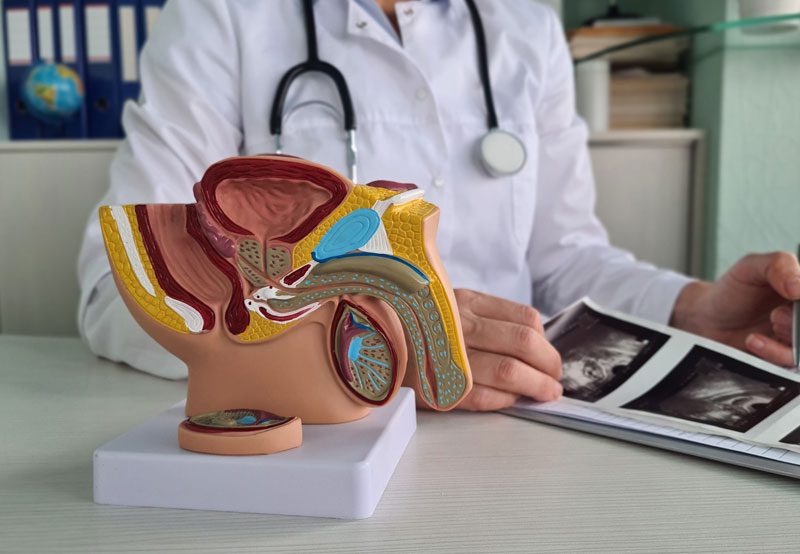
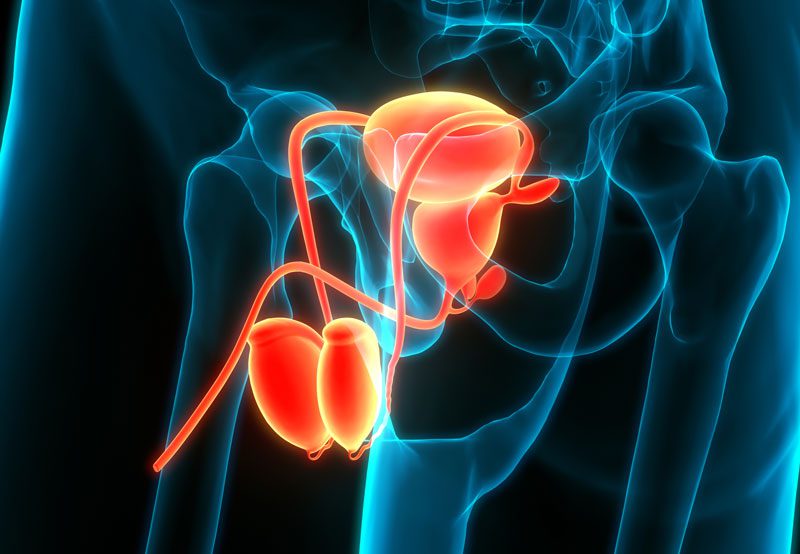
Testicular cancer is a malignant tumor that develops in one or both testicles, most commonly arising from germ cells that produce sperm. It is less common than many other cancers but is one of the most frequently diagnosed cancers in younger and middle-aged men. Testicular cancer is often highly treatable, especially when identified early, and many patients achieve excellent long-term outcomes with appropriate care.
Causes
The exact cause of testicular cancer is not always known, but several risk factors have been identified:
- Undescended testicle (cryptorchidism): A major known risk factor
- Family history: A close relative with testicular cancer may increase risk
- Personal history: Prior cancer in one testicle increases risk in the other
- Abnormal testicular development
- Age: Most common between ages 15 and 45, though it can occur at any age
- Certain genetic conditions

Symptoms
Testicular cancer often presents with localized changes in the testicle. Common symptoms include:
- A painless lump or swelling in the testicle
- Enlargement or firmness of one testicle
- A feeling of heaviness in the scrotum
- Dull ache in the groin or lower abdomen
- Sudden fluid buildup in the scrotum
- Back pain or other symptoms if the disease has spread
Diagnosis
Evaluation for testicular cancer generally includes:
- Physical examination: Assessment of the testicles and surrounding structures
- Scrotal ultrasound: Primary imaging test to identify suspicious masses
- Blood tumor markers: Such as alpha-fetoprotein (AFP), beta-human chorionic gonadotropin (beta-hCG), and lactate dehydrogenase (LDH)
- CT scan or other imaging: Used for staging and evaluation of spread
- Radical inguinal orchiectomy: Surgical removal of the affected testicle, which confirms diagnosis and begins treatment
Treatment Options
Treatment depends on the cancer type, stage, and tumor marker levels:
- Radical inguinal orchiectomy: Standard first treatment for most cases
- Active surveillance: Appropriate for selected early-stage patients after surgery
- Chemotherapy: Commonly used for higher-stage or recurrent disease
- Radiation therapy: Used selectively, especially for some seminomas
- Retroperitoneal lymph node dissection (RPLND): Surgical removal of lymph nodes in selected patients
- Testicular prosthesis: Optional implant for cosmetic restoration after orchiectomy
When to See a Specialist
Any persistent lump, swelling, firmness, or unexplained discomfort in a testicle should be evaluated promptly by a urologist. Early diagnosis greatly improves treatment success and may reduce the intensity of therapy needed. Long-term follow-up is important to monitor for recurrence, fertility considerations, hormone health, and survivorship needs.