
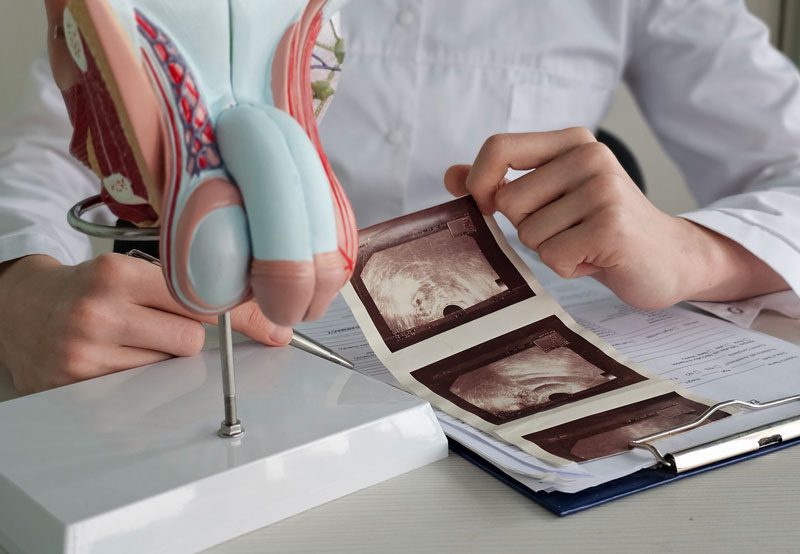

Penile cancer is a rare malignancy that develops in the tissues of the penis, most commonly arising from the skin or lining of the glans and foreskin. The majority of cases are squamous cell carcinoma. When detected early, penile cancer is often highly treatable and may be managed with organ-preserving approaches. Delayed diagnosis can allow the disease to grow deeper into surrounding tissues or spread to lymph nodes in the groin.
Causes
Penile cancer develops from abnormal cellular changes, often associated with chronic irritation or infection. Important risk factors include:
- Human papillomavirus (HPV) infection: Especially high-risk strains
- Phimosis: Tight foreskin that cannot be fully retracted
- Poor genital hygiene: Chronic inflammation beneath the foreskin
- Smoking: Tobacco use increases cancer risk
- Chronic skin conditions: Including lichen sclerosus or long-standing irritation
- Age: More common in older adults
- Weakened immune system: Increased susceptibility in immunocompromised patients

Symptoms
Symptoms may begin subtly and should not be ignored. Common signs include:
- A persistent sore, ulcer, or lesion on the penis
- A lump, thickened area, or wart-like growth
- Redness or skin discoloration
- Bleeding, drainage, or foul odor
- Pain or tenderness
- Swollen lymph nodes in the groin in more advanced cases
Diagnosis
Evaluation typically includes:
- Physical examination: Assessment of the penis and groin lymph nodes
- Biopsy: Essential for confirming the diagnosis and determining cancer type
- Imaging studies: MRI, CT scan, or ultrasound to evaluate local spread or lymph node involvement
- Laboratory testing: Based on overall health and treatment planning
Treatment Options
Treatment depends on tumor size, depth, location, and spread:
- Topical therapy or laser treatment: For selected superficial or pre-cancerous lesions
- Wide local excision: Removal of the tumor with preservation of surrounding tissue when possible
- Glansectomy or partial penectomy: For localized invasive cancers involving part of the penis
- Total penectomy: Reserved for extensive disease when necessary
- Lymph node surgery: Removal or biopsy of groin lymph nodes when spread is suspected
- Radiation therapy or chemotherapy: Used in selected advanced cases or in combination with surgery
- Reconstructive surgery: May be considered after cancer treatment to restore form or function
When to See a Specialist
Any persistent penile lesion, ulcer, growth, bleeding, or unexplained skin change should be evaluated promptly by a urologist. Early diagnosis improves the chance of successful treatment while maximizing opportunities for organ preservation and functional outcomes. Ongoing follow-up is important because recurrence can occur and early detection remains critical.